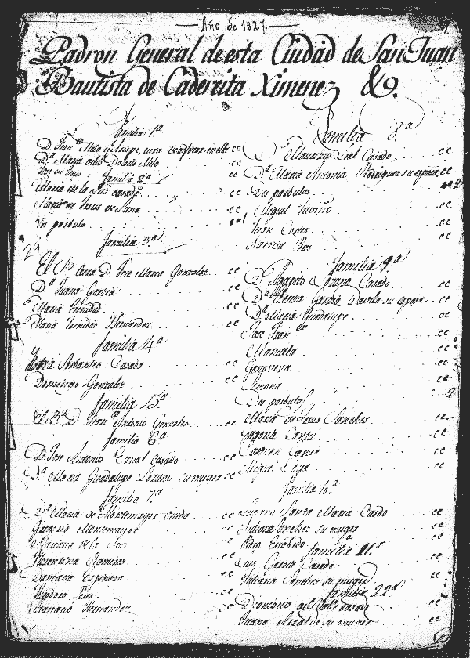
A census is the process of recording information about every member of a population. There are many different kinds of census, and the information they contain is largely dependent on the purpose of the census. However, as a rule, censuses are useful for your family tree as it provides ancestry information on the relationship of individuals within a population for a given period.
A padron is an electoral Mexican census or a census of voters. The use of a Mexican census as a source for family tree ancestry is often overlooked. However a census is a snapshot in time, of our ancestor’s family unit. It provides valuable ancestry information about who was still living, with whom and where. It can often help resolve ancestry problems with distinguishing one ancestor from another individual with a similar name. It also provides a clue for looking for Baptism or Death records before or after the census date. Finally, by the nature of how a census is taken, adjacent households in the Mexican census records often translate to adjacent households in the community. Thus, one may find additional relatives of your ancestor once you find his/her household. However, the most frequent use of a census is to ‘fix’ your ancestor at a specific date and location to further research the genealogy records in that area.
1827 Mexican Census
Key Features
Census Records Organization
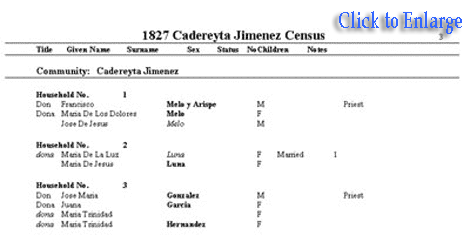
The 1827 Cadereyta Jimenez Mexican census is organized by community and then household and includes information on household member names, surnames, marital status, social status etc. This Mexican census includes an index to facilitate finding your ancestors in Cadereyta Jimenez and the surrounding communities.
Cadereyta Jimenez Census Record Statistics
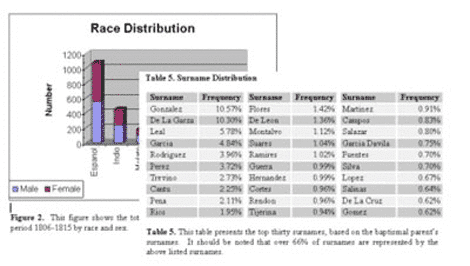
This section of the Cadereyta Jimenez census includes statistics on; Communities, Households, Populations and other Mexican census record characteristics. Its purpose is to help the reader get a feel for the community that their ancestors lived in.